
Stretch marks are one of the most common skin concerns we see at SKYNN — and one of the most misunderstood. The internet is full of creams, oils and devices that promise to eliminate them. Most don't. This article explains what stretch marks actually are, why most topical approaches fail, and which clinical treatments are producing real, measurable improvement for clients in Brisbane.
Whether your stretch marks are from pregnancy, rapid growth, weight fluctuation or hormonal change — the underlying cause is the same, and so is the approach to treating them effectively.
What Causes Stretch Marks?
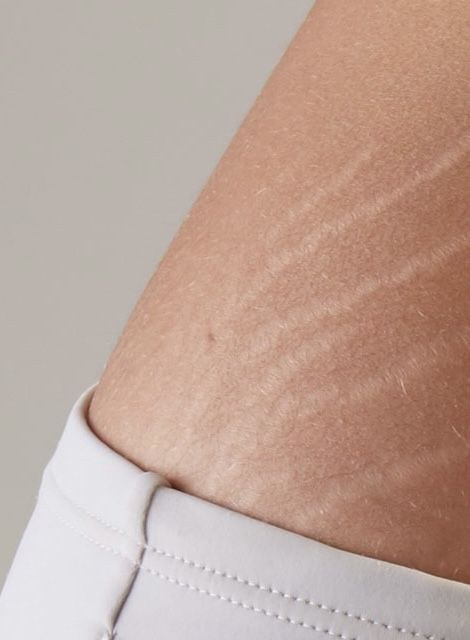
Stretch marks — clinically known as striae distensae — form when the skin is stretched faster than the dermis can accommodate. The dermal layer, which contains the collagen and elastin fibres responsible for skin's structural integrity, tears under the mechanical stress. The result is a scar within the dermal layer: a zone of disrupted collagen architecture surrounded by relatively normal tissue.
Common causes include rapid growth during puberty, pregnancy, significant weight gain or loss, intense physical training (particularly in muscle-building), and prolonged use of corticosteroid medications, which suppress collagen synthesis and make the skin more vulnerable to mechanical tearing.
New stretch marks — those that are red, pink or purple in colour (striae rubrae) — are in an active inflammatory phase. The skin is attempting to heal the dermal tear, which means it is actively producing collagen. These marks are generally more responsive to treatment because the biological repair process is already underway. With the right clinical intervention, this phase can be accelerated and guided toward a better outcome.
Older stretch marks — those that have faded to white or silver (striae albae) — represent mature scar tissue. The inflammatory phase has passed, the repair attempt has concluded, and what remains is a structurally abnormal zone of thin, flat, hypopigmented skin. These marks are more challenging to treat, but they do still respond to a well-designed clinical program.
Can Stretch Marks Be Removed?
Completely? No. Stretch marks are a form of dermal scarring — the skin will not fully return to its pre-stretch mark state. This is important to understand before committing to any treatment program.
Significantly improved? Absolutely. With the right treatment approach, the appearance of stretch marks can be reduced to the point where they become very difficult to see. Improvements in texture, colour, depth and surface definition are all achievable — particularly with a structured program combining the most clinically effective modalities.
The goal of stretch mark treatment is not erasure — it's meaningful, visible improvement. For most clients who complete a program, the result is marks that no longer affect how they feel in their skin.
What Treatments Help Improve Stretch Marks?
Topical treatments — creams, oils, serums — cannot penetrate deeply enough to remodel the dermal scar tissue. They may support surface hydration but they don't produce structural change. To meaningfully improve stretch marks, treatment must act within the dermis, where the disrupted collagen architecture is located.
At SKYNN, the two clinical modalities that produce the most reliable results for stretch mark revision are skin needling and RF fractional microneedling. Both can be used independently but are most effective when combined as part of a program.
Medical-grade skin needling (Collagen Induction Therapy) uses a motorised device — at SKYNN, the Dermapen 4 — to create controlled micro-injuries at precise depths within the skin. These micro-channels trigger the skin's wound-healing cascade, stimulating the production of new collagen and elastin and initiating remodelling of the existing scar matrix.
For stretch marks, needling penetrates the dermis directly within the affected zone, encouraging the body to replace the disorganised scar collagen with more structured, functional collagen fibres. Over a series of sessions, the surface texture of the stretch mark begins to normalise, the skin plumps, and in the case of newer marks, pigmentation often improves significantly.
Skin needling is a well-tolerated treatment with 24–48 hours of redness and minimal social downtime. It is suitable for most skin types and tones, including darker skin, and can be performed safely on all common stretch mark areas — abdomen, hips, thighs, breasts, upper arms and lower back.
RF fractional microneedling combines the collagen-stimulating mechanism of skin needling with precisely delivered radiofrequency energy. Insulated microneedles penetrate the skin at controlled depths; at the needle tip, RF energy is emitted directly into the dermis, generating a localised thermal injury that causes immediate collagen contraction and initiates a powerful remodelling response.
For stretch marks, this dual mechanism is particularly effective. The thermal energy reaches deeper into the dermal scar than needling alone, denaturing the existing fibrous matrix and stimulating the formation of new, better-organised collagen. The result is progressive improvement in texture, surface definition and skin quality that often exceeds what is achievable with needling alone.
RF microneedling is especially valuable for mature, white stretch marks — where the lack of active inflammation means that the stronger thermal stimulus is needed to restart the remodelling process. It is also effective for stretch marks in areas of skin laxity, where the concurrent tightening effect adds further benefit.
Downtime is typically 24–48 hours of redness and warmth. Treatment is performed with topical numbing cream applied beforehand.

The most significant results we achieve at SKYNN for stretch mark clients come from structured combination programs — typically alternating or sequencing skin needling and RF fractional microneedling sessions over a 3–6 month period.
This approach works because the two modalities act at different levels and through different mechanisms. Standard needling produces a surface-level wound response that supports new collagen formation and improves texture. RF microneedling adds thermal remodelling at greater depth, driving more significant structural change in the scar matrix. Used together, they create a more complete stimulus for repair than either could achieve alone.
We may also incorporate medical-grade topical actives — particularly growth-factor-based or collagen-supporting formulations — into the program to support and amplify the clinical results. In some cases, a medical-grade peel is used in early program stages to prepare the skin surface before device treatments begin.
The specific combination and sequencing are determined at your clinical assessment, based on the age, severity and location of your stretch marks, your skin type, and your availability for sessions and downtime.
Expected Results
Results vary based on the age and severity of the stretch marks, skin type, adherence to the program, and how well the skin is supported at home between sessions. As a general guide:
New stretch marks (red/pink): These respond well and relatively quickly. A program of 4–6 sessions combining skin needling and RF microneedling typically produces significant improvement in colour, texture and depth. Some clients see visible change from the first two to three sessions.
Mature stretch marks (white/silver): These require more sessions — typically 6 or more — and the timeline for visible change is longer, as results build progressively as new collagen matures over 8–12 weeks per session. The surface texture and definition of the marks typically improve first, followed by gradual colour blending.
In both cases, it's important to set realistic expectations: the goal is meaningful, visible improvement rather than complete elimination. For the majority of our clients who complete a program, the results are significant enough to have a genuine impact on how they feel in their skin.

Frequently Asked Questions
Can stretch marks be permanently removed?
Not completely. Stretch marks are a form of dermal scarring and the skin will not fully return to its pre-stretch mark state. However, clinical treatments like RF microneedling and skin needling can significantly reduce their visibility by stimulating new collagen and improving skin texture, colour and surface appearance. The improvement is often dramatic enough that marks become very difficult to notice.
Do creams and oils work on stretch marks?
Topical products cannot penetrate deeply enough to remodel the dermal scar tissue responsible for stretch marks. They may temporarily improve surface hydration and elasticity, but they do not produce structural change. Clinical treatments that work within the dermis are required for meaningful improvement.
Are new or old stretch marks easier to treat?
New stretch marks (striae rubrae) — those that are red, pink or purple — are in an active inflammatory phase and respond faster to treatment because the remodelling process is already under way. Older white or silver stretch marks (striae albae) have matured and require more sessions to achieve significant improvement, but they do still respond well to a combination program of RF microneedling and skin needling.
How many treatments are needed for stretch marks?
A minimum of 4–6 sessions is typically recommended, with RF microneedling and skin needling often used in combination. Sessions are spaced 4–6 weeks apart. Results continue to improve for several months after the program concludes as new collagen matures.
Is stretch mark treatment painful?
A topical numbing cream is applied before treatment to manage discomfort. The body areas commonly treated — abdomen, thighs, hips — are generally more sensitive than the face, but most clients find the procedure well tolerated with adequate preparation.
Can stretch marks be treated while pregnant or breastfeeding?
No. Clinical treatments including RF microneedling and skin needling are not performed during pregnancy or breastfeeding. If you are postpartum and not breastfeeding, a clinical assessment will confirm when it is appropriate to begin a treatment program.
Why a Consultation Matters
Stretch mark treatment is not a one-size-fits-all proposition. The right program depends on the age and type of your marks, their location and extent, your skin type and tone, and your lifestyle — including how much downtime you can accommodate and how consistently you can attend sessions.
At SKYNN, we don't recommend a treatment or sell a package before we've assessed your skin. Every client begins with a Skin Reset Session — a full clinical skin analysis in which we look at your skin, discuss your concerns and goals, and design a program that is specific to you.
This matters because a program that is correctly designed from the start will produce significantly better outcomes than a series of generic sessions without a plan. We map the treatment sequence, the modalities and the intervals — and we track your progress at every appointment to adjust as needed.
If stretch marks are something you've been managing for years and haven't known where to start, the answer is a clinical consultation. From there, you'll have a clear plan and realistic expectations — both of which are the foundation of a result you'll actually see.
Start With a Clinical Assessment
Book a Skin Reset Session
A full skin analysis and personalised program — before any treatment begins. Brisbane's most thorough starting point for skin and body concerns.
Book Now