If you've searched for clinical facials in Brisbane recently, you've probably been overwhelmed by the results. Hundreds of salons, medispas, clinics and laser centres all offering what appears to be a similar service — and all describing their approach in similar language. Relaxing. Rejuvenating. Personalised. Clinical. Results-driven.
The problem is that none of these words tell you what you actually need to know: whether the facial being offered can genuinely address your specific skin concern.
This guide explains the different types of facials available in Brisbane, which skin concern each is suited to, and why the right choice depends on your skin — not your budget, not a trend, and not what worked for your friend.
Why One Facial Doesn't Suit Everyone
The word "facial" covers an enormous range of treatments — from a 45-minute relaxation massage with a hydrating mask, to a professional skin needling session with exosome infusion delivered by a trained dermal therapist. These are not the same thing. They are not even similar things.
Yet they are frequently marketed using the same language, at price points that overlap, in spaces that look increasingly similar. This creates genuine confusion for anyone trying to make a considered decision about their skin.
The most useful distinction is not between "facials" as a category but between what each treatment is actually capable of doing to the skin. There are two broad categories:
Surface treatments — designed to clean, hydrate, exfoliate and temporarily improve the appearance of the skin. These are appropriate for maintenance, relaxation, and general skin health, but cannot address structural skin concerns.
Clinical treatments — designed to produce measurable change in the structure and function of the skin at a dermal level. These require proper assessment, professional technology, and a program approach to deliver meaningful results.
If you are searching for the best facial in Brisbane because you want to address active acne, established pigmentation, skin laxity, or scarring, you need a clinical treatment — not a luxurious surface experience.
The right facial isn't the most expensive one or the most popular one. It's the one that addresses what is actually happening in your skin.
Salon Facial, Clinical Facial,
or Medical Clinic?
| Feature | Salon / Spa Facial | SKYNN Clinical Facial | Medical / Dermatology Clinic |
|---|---|---|---|
| Primary purpose | Relaxation, temporary glow | Measurable, lasting skin change | Diagnosis & treatment of skin disease |
| Assessment before treatment | Minimal or none | Comprehensive clinical skin assessment & imaging | Medical consultation & diagnosis |
| Works at | Skin surface (epidermis) | Dermis and deeper layers | Medical & prescription-level intervention |
| Approach | One-off, product-led | Diagnostic-first, education-led, program-based | Medical management |
| Results timeline | Immediate, temporary | Progressive, lasting | Condition-dependent |
| Best for | Maintenance, relaxation | Acne, pigmentation, ageing, texture, laxity, scarring | Diagnosed skin disease & medical conditions |
This doesn't mean spa facials have no value. Regular maintenance treatments genuinely support skin health and are a pleasant, low-downtime way to maintain clarity between clinical sessions. The issue arises when people invest in spa facials expecting clinical outcomes — and are disappointed when established pigmentation, active acne or skin laxity persists.
SKYNN sits deliberately in the middle. We deliver genuine clinical results — proper assessment, professional technology and a considered treatment plan — without being a medical or dermatology practice. If your concern needs medical diagnosis or prescription management, that's a doctor's role, and we'll tell you. For the vast majority of skin concerns — acne, pigmentation, ageing, texture, congestion and loss of firmness — a clinical facial matched to your skin is exactly what creates lasting change.
Surface facial treatments work primarily in the epidermis — the outermost layer of skin. Collagen, elastin, acne, established pigmentation and most forms of scarring exist in the dermis. Treating dermal concerns with epidermal treatments will not produce lasting change, regardless of the product quality or therapist skill involved.
The Best Facial for Acne in Brisbane
Acne is not a surface problem, even though it appears at the surface. It develops through a combination of excess sebum production, abnormal skin cell turnover, bacterial imbalance and inflammation occurring in the follicle and dermis — which is why surface cleansing and exfoliation rarely produce lasting improvement in active inflammatory acne.
The right facial for acne depends entirely on what type of acne you have. Hormonal acne, bacterial acne, fungal acne and barrier-related breakouts all require different approaches. Applying the wrong treatment to the wrong type can worsen inflammation and delay recovery.
Clinical facials for acne at SKYNN focus first on calming inflammation and restoring barrier function before introducing corrective treatments. As active breakouts settle, we progress toward treatments that address congestion, pigmentation and, where relevant, the scarring left behind. Skin needling and RF fractional treatments become appropriate at the later stages of an acne program, not at the beginning.
The Best Facial for Pigmentation in Brisbane
Pigmentation is one of the most common reasons Brisbane clients seek professional skin treatment — and one of the most commonly mismanaged. Queensland's UV intensity means almost every adult has some degree of sun-related pigmentation, but UV damage, melasma and post-inflammatory hyperpigmentation are three different conditions requiring three different clinical approaches.
Melasma in particular carries a real risk of worsening with certain treatments. Heat-generating facial treatments — including some laser and IPL protocols — can trigger rebound hyperpigmentation in melasma-prone skin, producing a result that is darker and more widespread than the original concern. This is why a facial that "worked for someone else's pigmentation" may not work for yours, and may actively make yours worse.
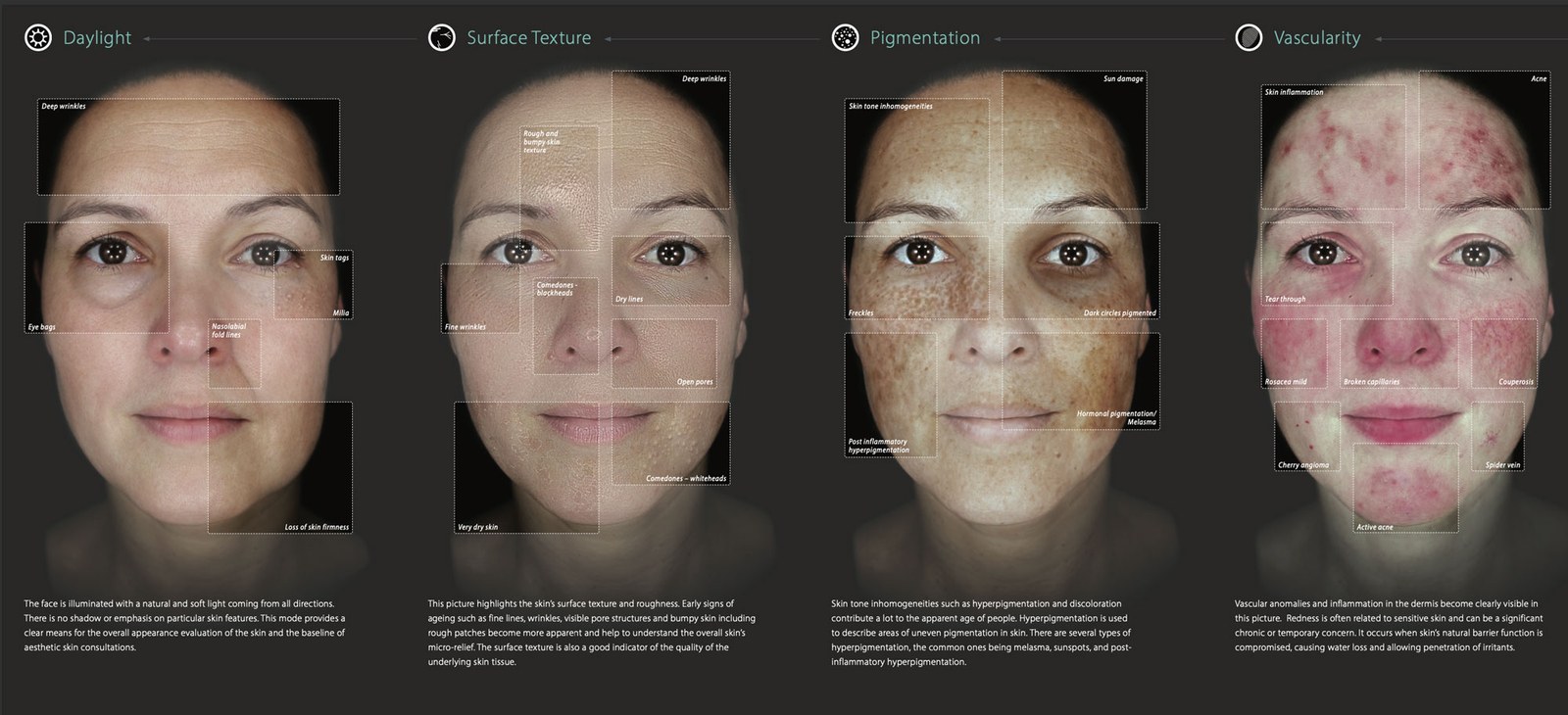
Before any pigmentation facial treatment, SKYNN uses OBSERV imaging to identify which type is present, at what depth it sits, and what treatment approach is appropriate. Without this step, pigmentation treatment is educated guesswork at best.
The Best Facial for Ageing Skin in Brisbane
The best facial for ageing skin is not a luxury hydrating treatment — though these have a maintenance role. If your primary concern is skin laxity, loss of jawline definition, neck softening, hooded eyelids or deeper fine lines, these concerns exist in the dermis and require treatments that work at that level.
For early to mild laxity and fine lines, a structured skin needling program produces genuine collagen induction that improves skin density and texture over a series of sessions. For moderate laxity across the jaw, neck or eyelids, RF thermal treatment or Plexr plasma provides more targeted structural improvement. For clients with both surface and structural concerns, a combination program addresses both simultaneously.
Anti-ageing facials that focus purely on topical hydration and surface massage will produce a pleasant result that lasts several days. They will not produce collagen remodelling. The distinction matters when you're investing in your skin.
The Best Facial for Sensitive Skin in Brisbane
Sensitive and reactive skin is one of the most mismanaged presentations in the facial industry, because the instinct is often to avoid doing anything — when in reality, gentle clinical treatment can produce significant long-term improvement in skin reactivity.
The first priority with sensitive skin is understanding what is causing the sensitivity. A compromised barrier, rosacea, perioral dermatitis and seborrhoeic dermatitis all present with redness and reactivity — but require different approaches. Applying a "sensitive skin facial" without identifying the cause is unlikely to produce lasting improvement and can sometimes make reactivity worse, particularly if the wrong active ingredients or treatment intensity are used.
For genuinely compromised skin, the most effective "facial" is often not a treatment at all — it is a properly prescribed barrier repair protocol, followed by the gradual introduction of LED therapy and targeted professional treatment once the skin's foundational health has improved.
Which Facial Is Right for You?
The honest answer is that the right facial for your skin cannot be determined by reading an article — including this one. It can only be determined by a proper clinical assessment that identifies what is happening in your skin, what is causing it, and which treatment approach is most appropriate given your skin type, Fitzpatrick classification, medical history and goals.
What this article can do is give you a framework for evaluating your options. If a skin clinic in Brisbane is recommending a treatment for your specific concern before they have assessed your skin properly, that is a meaningful red flag. The right recommendation always follows the assessment — never precedes it.
At SKYNN, every skin journey begins with a Advanced SKYNN Consultation — our Clinical Skin Reset using OBSERV multi-spectrum analysis. This tells us what is actually happening in your skin before we recommend how to address it. It is the only way we are comfortable making clinical treatment recommendations.
Frequently Asked Questions
What is the best facial for acne in Brisbane?
The best facial for acne depends on the type and stage of acne present. Active inflammatory acne typically responds best to clinical treatments focused on reducing inflammation and restoring barrier function rather than aggressive resurfacing. A proper skin assessment is essential — different acne types require completely different approaches, and the wrong treatment can worsen inflammation.
What is the best facial for pigmentation in Brisbane?
This depends on the type of pigmentation. UV pigmentation, melasma and post-inflammatory hyperpigmentation all require different approaches. Melasma can be worsened by heat-generating treatments if not properly assessed. A clinical skin assessment using OBSERV analysis identifies which type is present before any treatment is recommended.
What is the difference between a spa facial and a clinical facial?
A spa facial is primarily a relaxation experience designed to temporarily improve skin appearance. A clinical facial is a professional skin treatment using medical-grade technology to address specific concerns at a dermal level. Clinical facials require proper assessment beforehand, and results develop progressively over time rather than immediately after the appointment.
How do I know which facial is right for me?
The right facial depends on your specific skin concern, skin type, Fitzpatrick classification, and the underlying cause of your concern. At SKYNN, we recommend beginning with a Clinical Skin Reset before any facial treatment — this assessment identifies exactly what your skin needs and ensures the treatment selected is appropriate for your specific presentation.