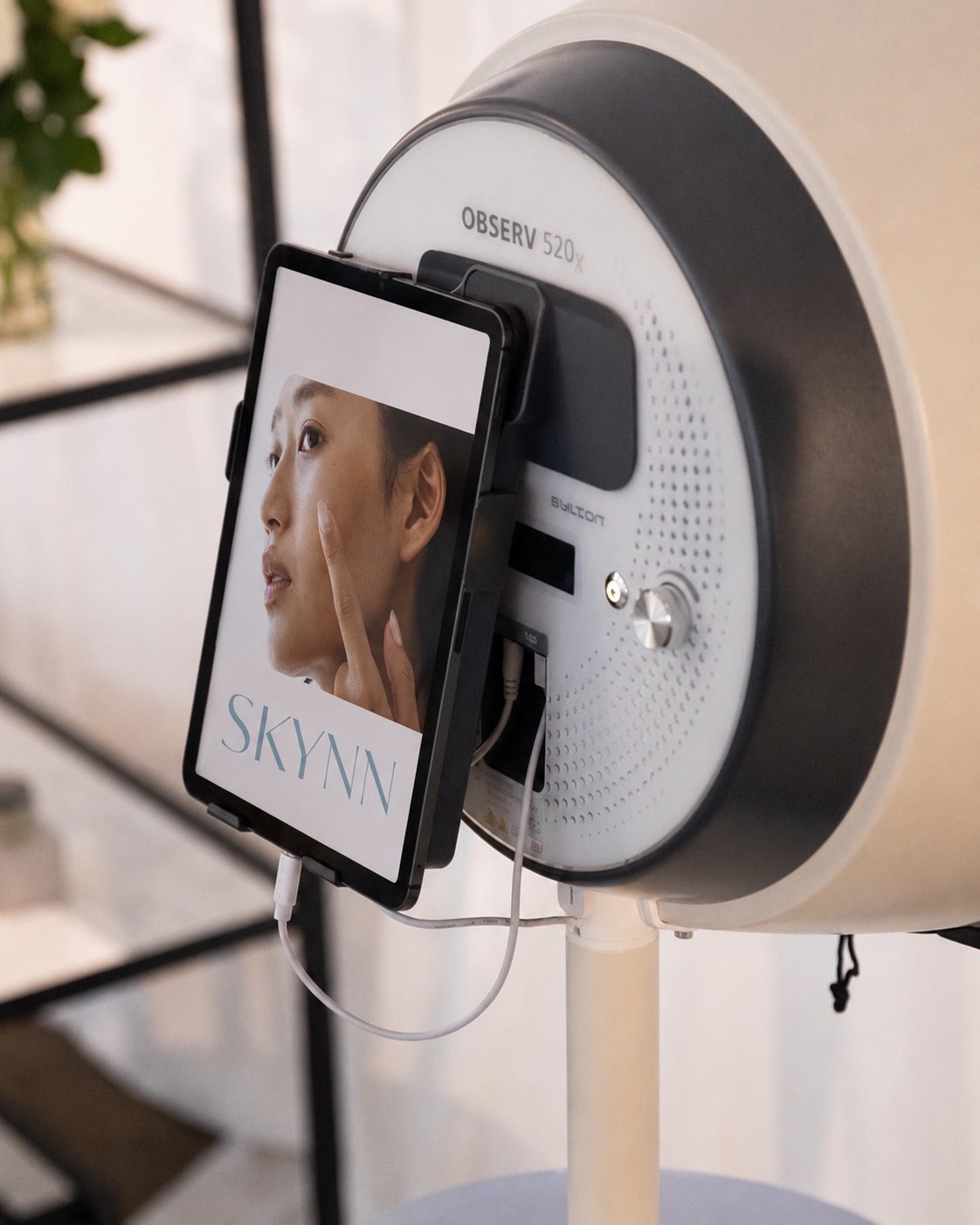
If you have ever sat in a consultation that felt more like a sales appointment than a clinical conversation, you are not alone. In Brisbane's busy aesthetics market, the word "consultation" has come to mean very different things at very different clinics — from a five-minute product pitch at the front desk, to a deep diagnostic assessment that genuinely shapes the rest of your skin journey.
The difference matters. Because a properly structured clinical skin consultation is not the preamble to your treatment — it is the most important treatment you will ever receive. Everything that follows depends on it.
This guide walks through what a real clinical skin consultation in Brisbane should include, what to look for, what to bring, and what you should expect to walk away with — whether you book with SKYNN or any of the other clinics across the city.
What is a clinical skin consultation, actually?
A clinical skin consultation is a structured diagnostic appointment with one purpose: to understand what is genuinely happening with your skin and to design a treatment pathway around those findings. It is the difference between a clinician examining your skin barrier and identifying root causes, versus a therapist looking at your face and recommending a facial.
At a clinical level, a proper consultation should involve four distinct phases. The first is gathering — your skin history, treatment history, lifestyle, current routine, medications, and goals. The second is examination — a hands-on clinical assessment of barrier function, congestion, pigmentation, vascularity and texture, ideally supported by diagnostic imaging. The third is analysis — translating those findings into a clinical understanding of what is driving your specific concerns. And the fourth is design — building a structured treatment program tailored to those findings rather than a generic protocol.
Skipping any of these phases is a sign you are not in a clinical consultation. You are in a sales appointment.
Why one appointment changes everything.
Most skin concerns — pigmentation, congestion, collagen loss, premature ageing, persistent breakouts — are not surface problems. They are biological processes happening at varying depths of the skin. Treating them effectively requires understanding what is actually happening at those depths.
This is the reason a single facial rarely produces lasting change for a clinical concern. Not because facials are ineffective, but because they are not designed to address root causes. They are maintenance treatments. The root work happens in the consultation — where the clinician identifies that your pigmentation is post-inflammatory rather than melasma, or that your barrier is compromised rather than dry, or that your breakouts are hormonal rather than congestion-driven. Those distinctions completely change which treatments will work and which will make things worse.
"A treatment is only as good as the diagnosis behind it. Without an accurate diagnosis, even the most advanced clinical technology delivers limited results."
This is why we built the Advanced SKYNN Consultation the way we did. It is not a free preamble before treatment — it is the foundation of the entire program. Every treatment that follows is prescribed through the findings of that first session. Because we have seen firsthand how often a client arrives believing they have one concern, only to discover through proper diagnostic assessment that something else entirely is driving the visible problem.
What happens during a proper clinical consultation
A well-run clinical skin consultation in Brisbane should take between 45 and 75 minutes. Anything significantly shorter is unlikely to include a meaningful diagnostic component. Here is what the structure typically looks like at a proper clinic.
Phase one — The clinical conversation
Your clinician sits down with you for an in-depth conversation about your skin. This is not chit-chat. Expect questions about your skin history (what concerns you have, how long they have been present, what has and has not worked previously), your lifestyle (sleep, stress, diet, sun exposure, exercise), your current routine (every product, every actively, the order you apply them), your medical history (relevant medications, hormonal changes, pregnancy or breastfeeding status), and your goals (what you want to change, what timeline you are open to, what budget feels comfortable).
The questions matter because they shape everything that follows. A clinician designing a treatment plan without this context is essentially guessing.
Phase two — The clinical examination
Your skin is then examined under proper conditions — specialised lighting, magnification, and ideally advanced diagnostic imaging. At SKYNN we use the OBSERV 520x, a 3D skin imaging device that reveals things invisible to the naked eye: UV damage that has not yet surfaced, vascularity patterns, pigmentation depth, pore structure, hydration levels, and underlying inflammation.
The reason diagnostic imaging matters is that visible skin concerns are usually the tail end of biological processes that have been happening for years. Imaging reveals what is coming — and lets your clinician treat the underlying issue rather than chasing the symptom.
Phase three — The analysis
Your clinician then synthesises everything — the conversation, the examination, the imaging — into a clinical understanding of what is actually driving your concerns. This is where genuine expertise shows. A good clinician will explain what they have found in language you understand, walk you through the underlying biology, and help you see your skin in a way you have not seen it before.
You should leave this phase with clarity, not confusion. If you are presented with a long list of concerns and a long list of treatments and feel overwhelmed, the analysis was not done properly.
Phase four — The treatment program
Only after the first three phases should treatment recommendations enter the conversation. A real clinical treatment program is not a list of services to buy — it is a structured, multi-step pathway designed around your findings, your goals, your skin's response timeline, and your budget.
A good program includes which treatments will be delivered, in what order, with what spacing, supporting at-home care, expected timeline for visible results, and what maintenance will look like once the corrective phase is complete. It should feel like a strategy, not a shopping list.
What to bring to your first consultation.
Preparation makes the difference between a useful consultation and a great one. Bring a list of every skincare product you currently use — not from memory, but actually listed out, including the actives. Bring any relevant medical context — current medications, recent prescriptions, hormonal changes, recent treatments at other clinics. Bring photos of your skin at its worst if you have them, especially for concerns like breakouts or pigmentation that fluctuate. And bring your real goals — not the polite version, the actual version. The more honest you are, the better the plan that comes out of it.
One quiet but important detail: arrive with clean, makeup-free skin if possible. Diagnostic imaging requires it. Most clinics will cleanse for you if you arrive with makeup, but it eats into your appointment time. You are paying for the clinical assessment, not the cleanse.
What you should walk away with
If your clinical skin consultation has done its job, you should leave with three things. First, clarity — a clear understanding of what is actually driving your skin concerns, expressed in language you understand. Second, a plan — a written or digital treatment program with specific treatments, sequencing, timelines and home-care. And third, agency — enough understanding of the process that you can decide whether and how to proceed without feeling pressured.
If you walk out feeling pushed toward a package you did not understand, or unsure exactly what your plan is, the consultation has not served you. A proper clinical consultation should make you feel confident and informed, not overwhelmed or rushed.
How to choose the right clinic in Brisbane.
Brisbane has dozens of skin clinics, and the quality of their consultations varies dramatically. A few signals to look for when deciding where to book.
Does the clinic charge for the consultation, or is it free? Free consultations sound generous but are typically structured as sales appointments — the clinic recovers the cost through treatment upsells. Paid consultations (usually $80 to $250 in Brisbane) tend to be more diagnostic and less pressured.
Does the consultation include diagnostic imaging? A clinic with OBSERV, Visia, or another professional skin analysis system signals genuine clinical investment. A clinic relying on a magnifying lamp alone is limited in what they can actually see.
How long is the consultation? Anything under 30 minutes is unlikely to include meaningful diagnostic work. The sweet spot is 45–75 minutes.
What do they say about treatment plans? Listen for whether the clinic talks about treatment programs (sequenced, designed, structured) or individual treatments (à la carte, transactional). The language reveals the underlying philosophy. Clinics that build programs tend to deliver better long-term results than clinics that sell single sessions.
And finally — does it feel right? A consultation should feel like a clinical conversation, not a transaction. If your gut tells you something is off, trust it.
The Advanced SKYNN Consultation
At SKYNN, our version of the clinical consultation is called the Advanced SKYNN Consultation. It runs for approximately 60 minutes, includes a thorough clinical conversation, OBSERV 520x 3D skin imaging, a brief preparatory treatment with Medical-Grade LED therapy, and the design of your personalised treatment program — written, sequenced, with timelines and at-home support included.
It is the foundation of every program we deliver at SKYNN. We do not believe in one-off treatments because we have seen, over and over, that they do not produce the kind of skin change clients actually want. Real transformation requires a strategy. The Advanced SKYNN Consultation is where that strategy is built.
Whether you book with SKYNN or any other clinical skin clinic in Brisbane, the principles in this article are universal. A proper clinical consultation should leave you clearer, more informed, and confident about the path forward. If it does not, you have not had a clinical consultation — and you should keep looking until you do.
Your skin deserves a strategy.