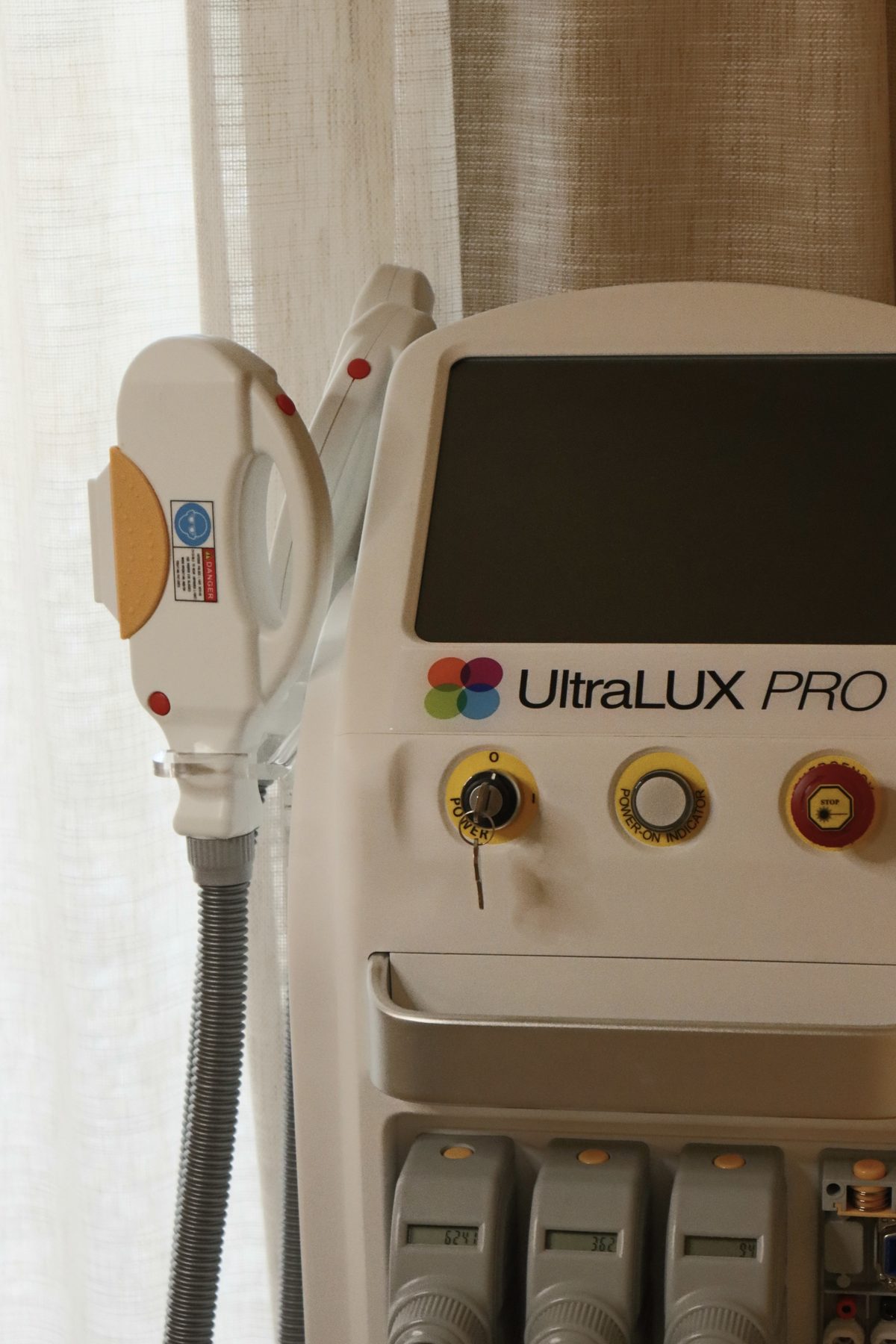
Medical-grade IPL therapy targeting pigmentation, sun damage, redness, rosacea and vascular irregularities — with clinical precision calibrated for Queensland skin. Results that compound over a structured program.
Intense Pulsed Light (IPL) is a non-invasive, medical-grade technology that delivers precise wavelengths of broad-spectrum light into the deeper layers of the skin. Unlike laser which uses a single wavelength, IPL targets multiple chromophores simultaneously — melanin for pigmentation correction and haemoglobin for vascular and redness treatment.
In Queensland's high-UV environment, sun damage, pigmentation and redness are among the most common skin concerns — and IPL is one of the most clinically effective tools available to address them. At SKYNN, every IPL program is calibrated to your skin type and concern, with conservative protocols designed for safe, effective treatment of Queensland skin.
A consultation and patch test is required before commencing any IPL correction program. This is non-negotiable — it protects your skin and ensures precise, safe treatment delivery.
IPL is clinically effective for a range of skin concerns — particularly those driven by UV exposure, vascular irregularities and melanin overproduction, and as a supportive part of an acne plan. At SKYNN, we identify the precise concern type and depth before any treatment is commenced.
Sunspots, age spots and diffuse UV-induced pigmentation across the face, neck and décolletage. IPL targets melanin deposits and progressively lightens and clears pigmented areas.
Diffuse facial redness, flushing and rosacea caused by dilated capillaries. IPL targets haemoglobin in blood vessels to reduce redness and restore a calm, even complexion.
Visible broken capillaries, spider veins and vascular irregularities on the face and nose. IPL coagulates the vessel walls to progressively eliminate visible vascular lesions.
Residual pigmentation left after acne, trauma or inflammation. IPL can target and progressively reduce the appearance of post-inflammatory marks for a more even skin tone.
Within a structured acne program, IPL can be used as a supportive treatment — helping target the bacteria and inflammation involved in breakouts and calming associated redness. It is one option among several, not a standalone cure, and is chosen at assessment. See our acne treatment page.
Overall skin tone irregularity and dullness caused by sun exposure and ageing. IPL photorejuvenation targets both pigment and vascular concerns simultaneously for comprehensive skin tone correction.
Comprehensive photorejuvenation treating the visible signs of sun damage and ageing — pigmentation, redness, dullness and uneven texture — in a structured treatment program.
IPL is highly effective for the right pigment — but it is not suitable for every pigmentation concern, and using it on the wrong type can make pigment worse. This is why suitability is always confirmed before treatment, not assumed.
Superficial, sun-induced pigmentation — sun spots, freckles and solar damage that sit near the surface. In these cases IPL targets the pigment with light energy so the body can clear it. This is where IPL performs at its best.
Melasma and hormonally influenced or heat-sensitive pigment can worsen with IPL, because the heat that makes IPL effective on sun spots can stimulate melasma to rebound and darken. For these presentations we generally recommend a heat-aware pathway such as professional depigmentation rather than IPL.
Sun damage, post-inflammatory pigmentation and melasma can look similar on the surface but behave very differently. Identifying which you have is the whole point of assessment — see our pigmentation treatment page for how every pigment type is assessed and matched to the right pathway.
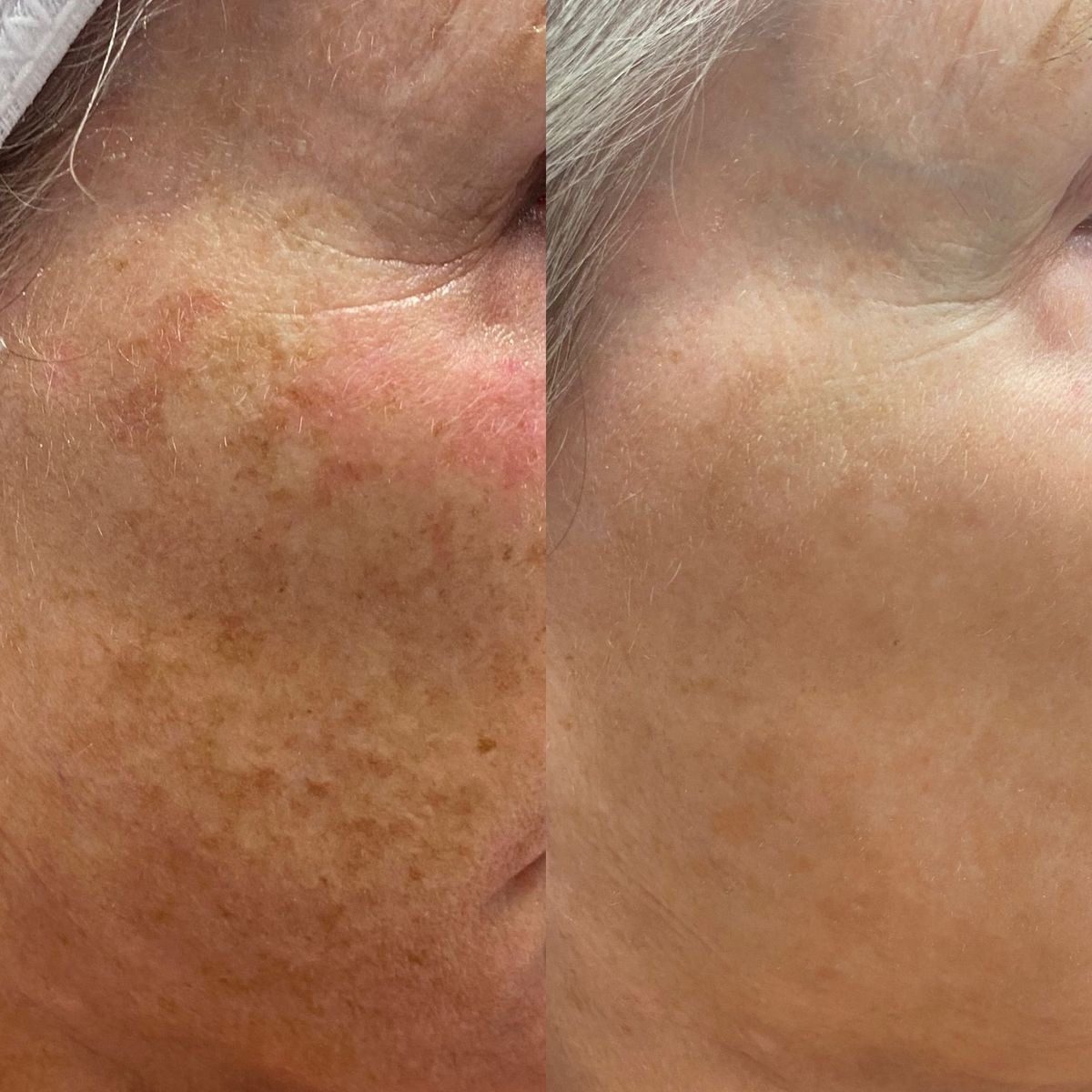
A structured IPL program targeting UV-induced pigmentation across the cheek and temple. Results shown following a course of treatments at SKYNN Clinical Skin.
Every IPL journey at SKYNN begins with a clinical consultation and mandatory patch test. We assess your skin type, Fitzpatrick classification, concern history and treatment goals — then confirm your skin's response to IPL energy before commencing a full program.
During each session, precise IPL energy is delivered to the targeted treatment area. The sensation is typically described as a warm snap. A cooling gel is applied throughout and treatment takes between 20 and 45 minutes depending on the area being treated.
IPL results compound over a structured program — typically 3 to 6 sessions depending on concern severity. Pigmentation darkens and lifts in the days following treatment before clearing progressively. Redness and vascular concerns improve with each session.
IPL works with light and heat, so how you prepare your skin and protect it afterwards directly affects both your safety and your result. These are confirmed with you at consultation.
IPL at SKYNN is delivered as a targeted, concern-specific program rather than a one-off:
A structured course focused on superficial sun-induced pigmentation, sun spots and uneven tone — lifting and clearing surface pigment progressively across the program. Suitability confirmed at assessment.
A structured course focused on diffuse redness, flushing and vascular irregularity. Where redness is driven by rosacea, we assess suitability carefully — see our rosacea treatment page.
All IPL treatments are available to book directly. A consultation and patch test is required before commencing your first session — this is included as a separate appointment.
If you'd like to discuss IPL with one of our therapists before booking, we're happy to help. A consultation is always a good starting point.
Book a ConsultationIPL is frequently used for the vascular redness of rosacea — but only once inflammation is controlled and the barrier is stable. See rosacea treatment for how it fits into a full program.
Book your IPL consultation and patch test at SKYNN Albion, Brisbane. Our clinical team will assess your skin, confirm your suitability for treatment and build your personalised IPL correction program.
Published by SKYNN Clinical Skin · Reviewed under the clinical oversight of Daniela Milos, Founder & Clinical Director · Last reviewed October 2026
This page provides general information about cosmetic skin treatment and does not constitute medical diagnosis or advice. IPL suitability is always confirmed by consultation and patch test.