If your skin has started behaving like someone else's — drier one week, breaking out the next, more reactive to products that never bothered it before — you are not imagining it. In your 40s, the biology of your skin genuinely changes. This guide explains what is happening beneath the surface, and why the answer is rarely "more anti-ageing."
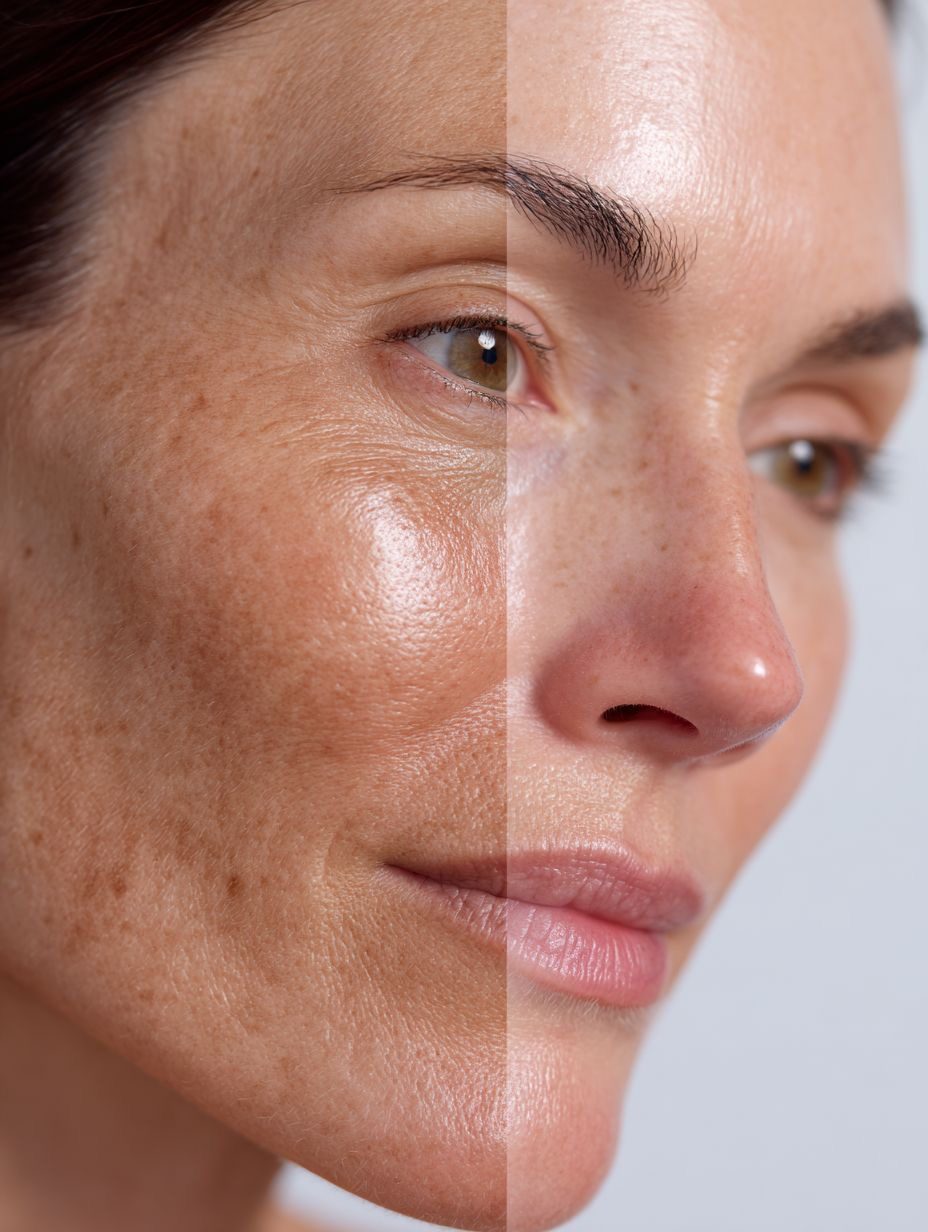
Perimenopause — the transition before menopause — changes how skin behaves, because declining and fluctuating oestrogen affects collagen, hydration, the skin barrier, oil production, sensitivity and pigmentation. Skin can become drier, thinner, less firm and more reactive, sometimes all at once. The most common mistake is responding with more intensive anti-ageing treatment. Often the skin needs a different strategy — support and repair first — rather than simply more.
Perimenopause is the phase — often lasting several years, commonly beginning in the 40s though it varies — when the ovaries gradually wind down and hormone levels, particularly oestrogen, begin to fluctuate and decline before periods stop altogether. Most conversations about this transition focus on hot flushes, sleep and mood. Skin is discussed far less, yet it is one of the largest oestrogen-responsive organs in the body.
Oestrogen has a broad influence on skin. It supports collagen production and skin thickness, contributes to the skin's oil and moisture balance, and helps maintain the barrier that keeps water in and irritants out. As oestrogen becomes erratic and then lower, several of these functions shift at the same time. That overlap is why the change can feel abrupt even though the process itself is gradual — you are not experiencing one problem, you are experiencing several small shifts converging.
The important reframe: this is not your skincare suddenly "stopping working," and it is not something you have done wrong. It is a change in the skin's underlying biology — which means the response should be a change in strategy, not simply an increase in effort.
Not everyone experiences all of these, and the degree varies considerably from person to person. But most perimenopausal skin change falls into a recognisable set of shifts.
When skin changes in the 40s, the instinctive response — encouraged by a great deal of marketing — is to escalate: stronger actives, more frequent treatments, higher intensity. Sometimes that is exactly wrong.
If the barrier has become more fragile and the skin more reactive, layering aggressive products or stacking intensive treatments onto it can drive more inflammation, more sensitivity and more pigmentation — the opposite of the intended result. Skin that is simultaneously drier, more reactive and losing firmness is not a skin that simply needs to be pushed harder.
The more useful principle is sequence and suitability, not intensity. For many women the priority order becomes: restore the barrier and hydration, protect against UV, then address collagen and specific concerns in a considered order — rather than treating every symptom at maximum strength at once. Active ingredients and clinical treatments still have a role. It is a question of what, in what order, and at what intensity for your skin specifically.
Skin in your 40s doesn't simply need more anti-ageing. It may need a different strategy, because the biology of the skin is changing. That is the entire premise of how we assess and plan at this life stage.
Oestrogen supports the skin's ability to produce oils and hold water, and it contributes to barrier resilience. As levels decline, the barrier becomes less effective at retaining moisture — felt as dryness, tightness and greater reactivity. Products that once suited you can start to feel too strong. This is usually a barrier-and-hydration problem first, and treating it as such is more effective than reaching for stronger actives. If your barrier feels persistently compromised, our guide to the signs of a compromised skin barrier explains what to look for.
It can contribute. As oestrogen falls, the relative influence of androgens can increase, which for some women triggers breakouts, typically around the jawline, chin and neck. This adult hormonal acne behaves differently from teenage acne and frequently coexists with dryness and sensitivity — which is exactly why aggressive acne treatment can backfire at this stage. It usually calls for a more considered approach than simply drying the skin out. Our acne treatment guidance covers how adult acne is assessed and managed.
For some women, yes. Melasma in particular is strongly hormone-influenced, and this transition can trigger or worsen it. Because melasma often has a hormonal driver, it typically needs a more patient, layered approach than pigmentation from sun damage alone. If you are unsure which you are dealing with, our explainer on hyperpigmentation vs melasma is a useful starting point, and the pigmentation treatment guide covers the Queensland UV context in more depth.
Yes. Oestrogen supports collagen production and skin thickness, and its decline is associated with a meaningful reduction in skin collagen — commonly cited as around 30% in the first five years around menopause, then a slower ongoing decline, with individual variation. This is why firmness and skin quality can change relatively quickly, and why maintaining collagen is easier than trying to rebuild it later. How firmness changes across the decades is covered in our ageing skin and laxity guide.
Often, yes — but usually toward support rather than sheer strength. The instinct to add stronger anti-ageing actives can work against a barrier that has become more fragile. That does not mean abandoning actives; it means sequencing them sensibly, prioritising barrier support, hydration and daily sun protection, and not stacking multiple aggressive products at once. What your skin actually needs is best identified by assessment rather than assumption.
Hormonal skin change does not happen in isolation from where you live. In South East Queensland, cumulative UV exposure is high year-round, and heat and humidity place their own demands on the skin. For women in perimenopause, these two forces can compound.
Pigmentation is the clearest example. Melasma driven partly by hormonal change can be aggravated by UV exposure, so in a high-UV climate, sun protection becomes even more central to managing it — not an optional extra. Heat can also intensify flushing and reactivity in skin that has become more sensitive, and dehydration from a more fragile barrier can be harder to stay ahead of in a warm climate.
None of this means Brisbane skin is a special case biologically. It means the environmental layer sitting on top of the hormonal one is more significant here than in cooler, lower-UV parts of the country — and it is worth factoring into how treatment and home care are planned through the seasons.
Two women in their mid-40s can have almost nothing in common at the skin level. One may be dry, reactive and losing firmness; another may be dealing with hormonal breakouts and pigmentation on skin that is still relatively robust. "Perimenopausal skin" is not a single condition with a single protocol — it is a stage during which a range of changes can appear in different combinations and to different degrees.
This is precisely why self-diagnosing and self-prescribing from the internet tends to disappoint at this life stage. The right starting point is understanding what your skin is actually doing — barrier status, hydration, pigmentation drivers, collagen and sensitivity — before deciding what to treat and in what order.
That is the role of a proper clinical assessment. At SKYNN, that assessment is the foundation of the SKYNN Method — our framework of diagnosing the skin first, then building a plan around what it needs rather than around a fixed menu of treatments.
SKYNN is a clinical skin clinic in Albion, Brisbane. We are the kind of clinic willing to say a treatment may not be right for you — and at this life stage in particular, that diagnostic honesty matters more than intensity.
How firmness changes across the decades, and which stage of laxity responds to what.
How to recognise a fragile barrier — the shift underneath much perimenopausal dryness and reactivity.
Telling hormonally driven pigmentation apart from sun-related pigmentation.
Why Queensland's UV environment shapes how pigmentation is best managed.
How adult and hormonal breakouts are assessed and treated.
Where a personalised plan for your skin actually begins.
If your skin has changed and you are not sure what it is asking for, the most useful thing you can do is have it properly assessed rather than guess. An Advanced SKYNN Consultation looks at what is happening beneath the surface and translates it into a plan built for your skin at this stage of life.
Book an Advanced SKYNN Consultation