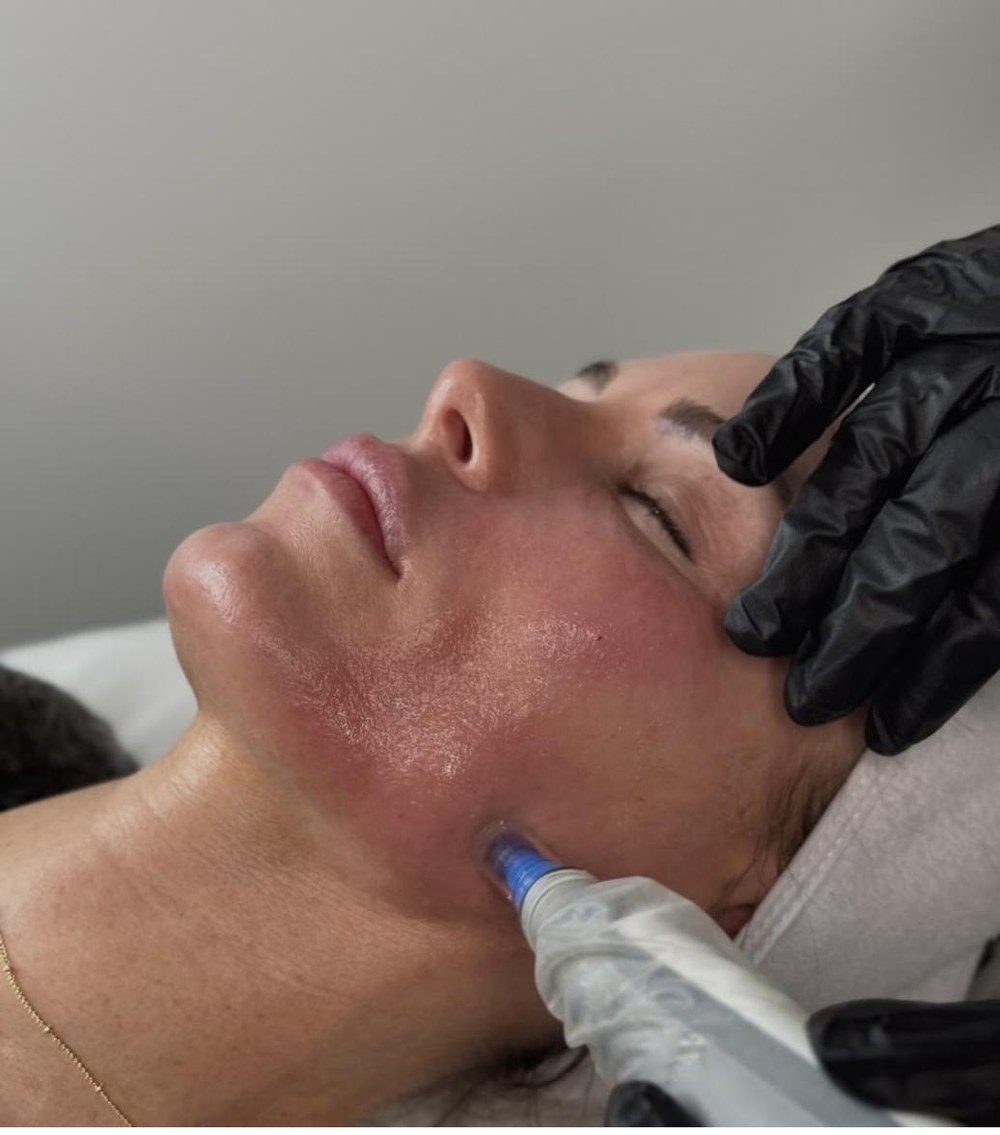
Precision collagen induction therapy using medical-grade micro-needling to stimulate the skin's natural regenerative response for lasting transformation.
For the complete clinical guide to Dermapen skin needling in Brisbane — what it treats, results to expect and how programs are structured — see Dermapen Skin Needling Brisbane.
Dermapen needling — also known as microneedling or collagen induction therapy (CIT) — is one of the most clinically validated skin treatments available. Using a medical-grade device with ultra-fine needles, it creates thousands of controlled micro-channels in the skin, triggering the body's natural wound-healing response.
This response stimulates the production of new collagen and elastin, accelerates cellular turnover, and significantly improves the skin's ability to absorb active topicals. Over a structured course of treatment, the result is visibly smoother, firmer and more radiant skin.
At SKYNN, all needling treatments are paired with clinical-grade actives — including exosomes, growth factor serums and targeted peptide complexes — to amplify results and accelerate healing.
mm Adjustable Depth
Session Course
Hours Downtime
Months Collagen Building
Micro-channels disrupt fibrotic scar tissue, triggering new collagen formation and progressively smoothing indented and textural scarring.
Collagen and elastin stimulation restores skin structure, reducing the appearance of fine lines and improving overall skin quality and density.
Skin tightening and collagen renewal minimise pore appearance, resulting in a visibly smoother, more refined skin surface.
When paired with targeted brightening serums, needling enhances penetration of actives and accelerates reduction of post-inflammatory and UV-related pigmentation.
Cellular renewal and collagen remodelling smooth rough, uneven texture, improving both the appearance and feel of skin over time.
Needling disrupts the dermal architecture of stretch marks and stimulates collagen regeneration, gradually improving colour and texture.
At SKYNN, needling is never a standalone treatment applied generically. Each session is designed with clinical precision — needle depth, speed and topical pairings are selected specifically for your skin concern and tolerance.
We combine Dermapen needling with our Exosome and Peptide complex to dramatically accelerate healing, reduce post-treatment inflammation and deepen results. This combination approach sets our outcomes apart from standard needling clinics.
Our most popular combination. Exosome therapy applied immediately post-needling supercharges the healing response, extending the regenerative window and significantly improving results per session.
Learn About Exosomes →
Treatment FAQs
Substantially. A motorised pen creates vertical channels at a controlled, adjustable depth; a roller drags needles across the skin at an angle, creating wider tears with less precision and more surface trauma. Home devices also operate at depths too shallow to reach the dermis where collagen is made, and carry real infection risk without clinical sterilisation. Home rolling mostly improves product absorption, not skin structure.
It can, if performed inappropriately. Needling is a controlled inflammatory injury, and inflammation is a trigger for post-inflammatory hyperpigmentation — a particular consideration in deeper skin tones and in melasma, where needling can provoke a rebound. This is managed through conservative depth, adequate spacing between sessions, barrier preparation beforehand and strict sun protection afterwards. Where melasma is the primary concern, we usually treat it differently.
Most people notice a change after the third or fourth session. Before that, any improvement is largely temporary swelling rather than new collagen. The full result of a course develops over three to six months after the final treatment, as remodelling completes. If you are looking for visible change within a fortnight, needling is the wrong expectation rather than the wrong treatment.
Topical anaesthetic is applied prior to all needling treatments. Most clients experience minimal discomfort — a mild vibration sensation. Deeper treatments on areas like the nose or upper lip may be more sensitive.
Sessions are typically spaced 4–6 weeks apart to allow full healing and collagen production between appointments. A course of 3–6 sessions is recommended for most concerns, with maintenance every 3–6 months.
Redness and mild sensitivity typically resolve within 24–48 hours. Deeper treatments may take 3–5 days. You will be provided with a complete post-care protocol and recommended products.
We provide post-care instructions and product recommendations following every treatment. Generally, we advise avoiding active ingredients (AHAs, retinol, vitamin C) for 5–7 days and prioritising barrier-supporting hydration.
Active pustular acne is a contraindication for needling. However, once breakouts are controlled, needling is one of the most effective treatments for reducing acne scarring and post-inflammatory marks. Your clinician will advise at consultation.
Microneedling is the most versatile treatment we offer and the one most often requested by name. It is not appropriate for everyone, and there are presentations where it will underdeliver regardless of how well it is performed.
Needling over active pustular acne spreads bacteria through the micro-channels and can create new scarring. Breakouts are controlled first. This is sequencing rather than refusal.
Where there is a personal or family history of keloid formation, controlled injury carries a genuine risk of provoking it. Disclose this at consultation — it changes what we recommend.
Needling improves skin quality and texture. It does not lift. Where the concern is jowling or sagging rather than texture, radiofrequency or a surgical opinion is the more useful conversation.
Needling reaches the walls of narrow, deep scars poorly. It improves surrounding texture but the scars themselves respond modestly. Expect softening rather than resolution, and consider adjunct techniques.
Needling is also unsuitable during active infection, over cold sores, in uncontrolled diabetes affecting healing, during pregnancy, and where there is active eczema or psoriasis in the treatment area.
Needling stimulates collagen through controlled injury. The response is real and measurable, but it is gradual and cumulative rather than immediate. Skin often looks worse before it looks better — redness for 24 to 48 hours, then a period where nothing appears to be happening while remodelling occurs below the surface.
Meaningful change typically appears after the third or fourth session, with the full result of a course visible three to six months after the final treatment. A single session produces a temporary plumping from inflammation that settles within days; it is not a result.
Results are not permanent. Collagen continues to decline with age, so maintenance every three to six months holds what has been built. Anyone describing needling as a one-off fix is describing the swelling, not the remodelling.
"One needling session is a stimulus. A course is a treatment. The difference is the reason most people who try it once conclude it doesn't work."