Walk into any aesthetic clinic in Brisbane and you'll be offered some version of these three treatments. Skin needling. RF. Fractional RF. They're often grouped together as "collagen induction therapies" and pitched somewhat interchangeably — which obscures the fact that they work through genuinely different mechanisms, treat different concerns, and produce different results.
Choosing between them isn't about which is "better." It's about which is right for *your* skin, *your* concern, and *your* goals. This guide breaks down what each treatment actually does, what it's clinically appropriate for, and how a properly structured consultation helps you decide.
Understanding collagen induction.
All three treatments share a single underlying principle: they create a controlled, sub-clinical injury to the skin that triggers the body's natural wound-healing response. That response includes a cascade of biological events — inflammation, fibroblast activation, neocollagenesis (new collagen formation), and remodelling of existing collagen and elastin.
The difference between the three treatments is *how* that controlled injury is delivered, *what depth* it reaches, and *what additional mechanisms* are layered on top.
To understand the comparison, it helps to know that collagen-producing fibroblasts live in the dermis — the layer of skin sitting beneath the epidermis. Treatments that successfully reach and stimulate the dermal fibroblasts will produce collagen induction. Treatments that don't reach the dermis won't, no matter what marketing claims they make.
Skin needling, explained.
Skin needling — sometimes called microneedling, collagen induction therapy, or CIT — uses an array of fine, sterile needles to create controlled micro-channels in the skin. The needles penetrate the epidermis and a portion of the dermis, depending on the depth setting used. Common clinical depths range from 0.5mm for superficial work up to 2.5mm for deeper concerns like scarring.
The mechanism is mechanical. The needles create thousands of micro-injuries per minute. The skin perceives this as wound trauma and initiates the healing cascade. Over the following weeks, fibroblasts produce new collagen and elastin, the existing skin matrix is remodelled, and the visible result is improved skin texture, smoother fine lines, smaller-appearing pores, and improved overall skin quality.
What skin needling does well is textural concerns. Fine lines. Mild to moderate acne scarring. Enlarged pores. Uneven skin texture. General skin quality and tone. It's also one of the safest energy-free treatments because there's no thermal component — meaning lower risk of post-inflammatory pigmentation, which matters significantly for clients with higher Fitzpatrick skin types (Fitzpatrick III-VI) or those prone to melasma.
What skin needling doesn't do as well is significant skin laxity, deeper wrinkles in older skin, or severe collagen loss. The mechanical injury alone isn't always enough to produce dramatic tightening or volumising effects.
What a skin needling treatment actually feels like
Topical anaesthetic is applied for 30-45 minutes before treatment. The actual needling pass takes 20-40 minutes depending on the area treated. Most clients describe the sensation as a vibrating prickle rather than pain. Immediately after, skin looks similar to mild sunburn — pink, slightly inflamed, sometimes with pinpoint bleeding on deeper passes. Downtime is typically one to three days of social redness, with full recovery within five to seven days.
Radiofrequency (RF), explained.
Pure radiofrequency is fundamentally different from skin needling. RF treatments deliver electromagnetic energy through the skin's surface, which is converted to thermal energy in the deeper tissue layers. The heat triggers an immediate collagen contraction (visible tightening effect) and stimulates new collagen production over the following weeks and months.
Crucially, traditional RF doesn't break the skin. The energy passes through the epidermis without disrupting it, which means very minimal visible downtime — usually just some warmth and temporary flushing.
What RF does well is skin tightening. Mild laxity. Early signs of ageing. Improvements in skin firmness and contour. Some platforms also produce subtle volumising effects because heating stimulates not just collagen but also subcutaneous tissue remodelling.
What RF doesn't do well is textural concerns. Because it doesn't break the skin or create micro-channels, it has limited effect on acne scarring, deep textural irregularities, or surface-level concerns. It's best understood as a foundational tightening treatment, not a resurfacing one.
What an RF treatment feels like
RF treatments typically feel like a warm massage with periodic moments of more intense heat. There's no anaesthetic required for most platforms. The treatment lasts 30-60 minutes. Afterwards, skin may look slightly flushed for a few hours but is usually completely recovered within 24 hours. Results build gradually over three to six months as collagen remodelling continues.
Fractional RF — combining both worlds.
Fractional RF is where the two technologies converge. Treatments like fractional RF microneedling (Morpheus8 is the best-known brand in Australia, though there are several clinical platforms) use fine needles that deliver RF energy directly into the dermal layer.
The needles create the micro-injury collagen-induction response of traditional skin needling. The RF energy delivered through those needles produces simultaneous thermal collagen remodelling at depth. The combination is significantly more effective than either treatment alone for certain concerns — but with slightly more downtime as a tradeoff.
What fractional RF does well is deeper concerns. Skin laxity. Deeper wrinkles. Significant collagen loss. Mature skin requiring more dramatic intervention. Acne scarring (both atrophic and ice-pick). Body areas requiring tightening such as the lower face, neck, and abdomen post-pregnancy. It's also effective for textural concerns in clients whose collagen base needs more aggressive stimulation.
The trade-off is downtime and intensity. Fractional RF typically requires two to five days of social downtime, with visible micro-scab patterns and pronounced redness for the first 48-72 hours. The treatment itself is more uncomfortable than skin needling alone, even with anaesthetic.
What a fractional RF treatment feels like
Topical anaesthetic is applied for 45-60 minutes prior. The treatment delivers needles plus controlled heat — the sensation is sharper and warmer than standard needling. Treatment time is 30-60 minutes depending on area. The intensity, depth, and number of passes are tailored to the concern. Recovery includes a "sandpaper" texture and small dark dots (micro-crusts) for several days. Final results build over three to six months.
"The right treatment isn't the one with the most impressive technology. It's the one that matches what your skin actually needs."
How they actually compare — side by side.
If you're trying to make a decision, the clearest way to compare these treatments is across five practical dimensions: what they treat best, how deep they work, downtime, results timeline, and best-suited skin types.
Skin needling is best for textural concerns — fine lines, mild scarring, skin quality and tone. It works in the upper to mid dermis. Downtime is 1-3 days. Results build over three to six months across multiple sessions. It's appropriate for almost all skin types when delivered by a trained clinician.
Pure RF is best for early skin laxity, mild tightening, and improvements in firmness. It works through deeper thermal heating without breaking the skin. Downtime is essentially none. Results build gradually over three to six months. It's appropriate for all skin types and is particularly safe for higher Fitzpatrick types.
Fractional RF is best for significant concerns — deeper wrinkles, more pronounced laxity, severe acne scarring, mature skin. It reaches the mid-to-deep dermis. Downtime is 2-5 days. Results are more dramatic and build over three to six months. It requires more careful patient selection — particularly around skin tone and pigmentation history — but in the right hands is appropriate for most skin types.
Cost typically rises with intensity. Skin needling tends to be the most accessible per session. Pure RF sits in the middle. Fractional RF is usually the most expensive per session — but because results are more pronounced, fewer sessions are usually required.
So how do you actually choose?
The honest answer is that the choice depends on factors no article can give you. Your skin condition. Your concern. Your skin tone and pigmentation history. Your age and collagen status. Your goals — gentle maintenance versus dramatic intervention. Your lifestyle — how much downtime you can absorb. Your treatment history — what has and hasn't worked previously.
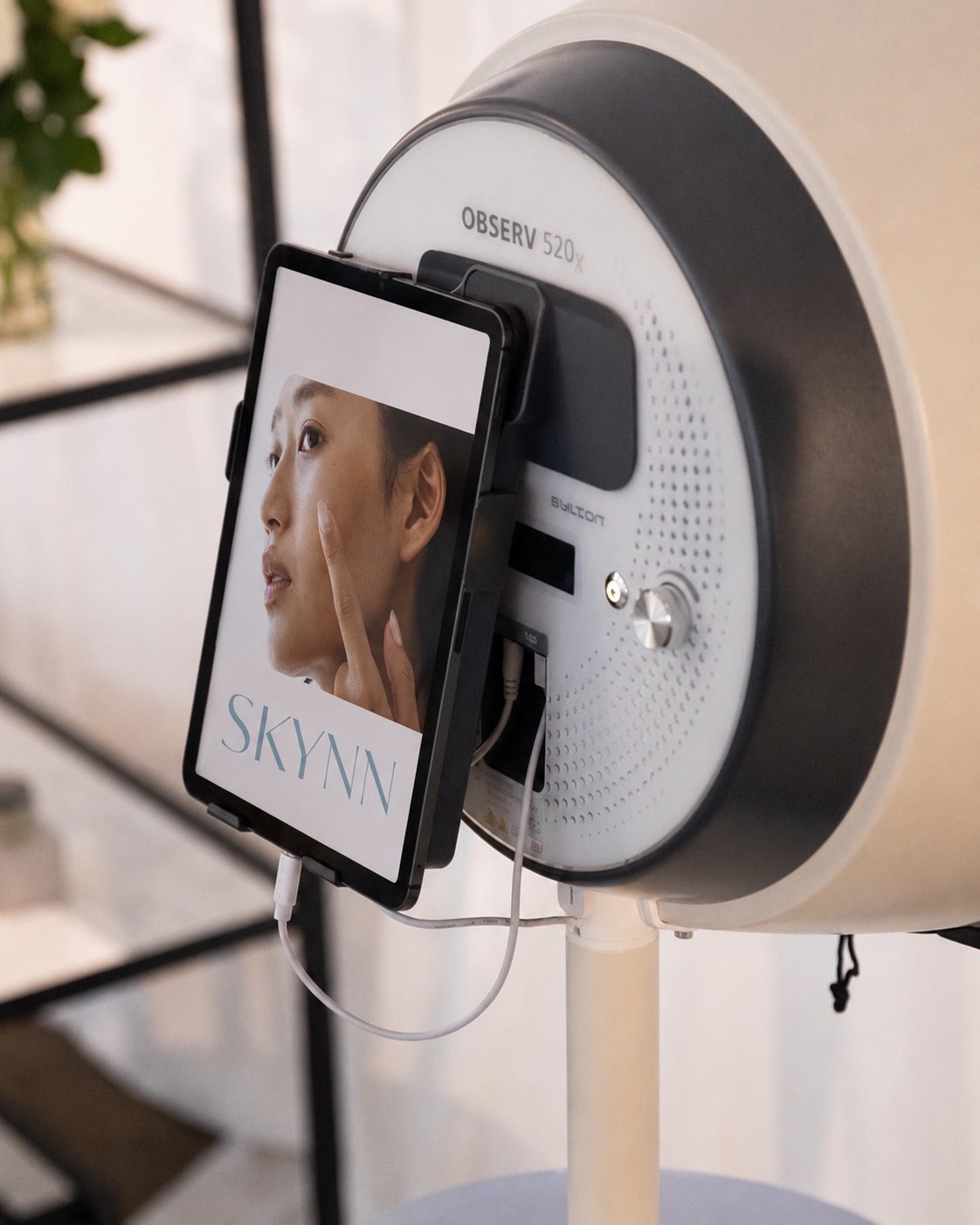
This is exactly why we don't recommend treatments at SKYNN without doing a clinical assessment first. The Advanced SKYNN Consultation includes diagnostic 3D skin imaging through the OBSERV 520x, a full clinical examination, and the design of a treatment program tailored to your specific findings. Sometimes that means skin needling. Sometimes RF. Sometimes fractional RF. Often it's a sequence of treatments combined over a structured timeline — because for many concerns, the right answer isn't one treatment but a strategic combination.
What we can say universally: if a clinic recommends one of these treatments to you without taking a proper history, examining your skin under proper conditions, and explaining *why* that treatment fits your specific concern — keep looking. The treatments themselves are powerful when applied correctly. They're disappointing or risky when applied wrong.
How we deliver these at SKYNN.
At SKYNN we offer both Dermapen skin needling and RF Thermal Fractional treatments — both prescribed only after an Advanced SKYNN Consultation has established that they're the right fit. Every program is structured. Every treatment has a timeline. Every client knows why they're having each session before it begins. We don't sell single treatments because we don't believe in them. We design programs because that's what produces lasting results.
If you've read this far and you're still unsure which is right for you, that's the correct response — these are clinical decisions that require clinical assessment. Book an Advanced Consultation and let us assess properly. The first piece of information matters more than any treatment.
Your skin deserves a strategy.